





Titanium Coffee Percolator Built Once, Brews for Life · 1.5L · 6 Cups · 395g · No Coatings
Titanium Coffee Percolator Built Once, Brews for Life · 1.5L · 6 Cups · 395g · No Coatings
Couldn't load pickup availability
Buy It Once
The Last Percolator You Will Ever Buy. Built Like It, Too.
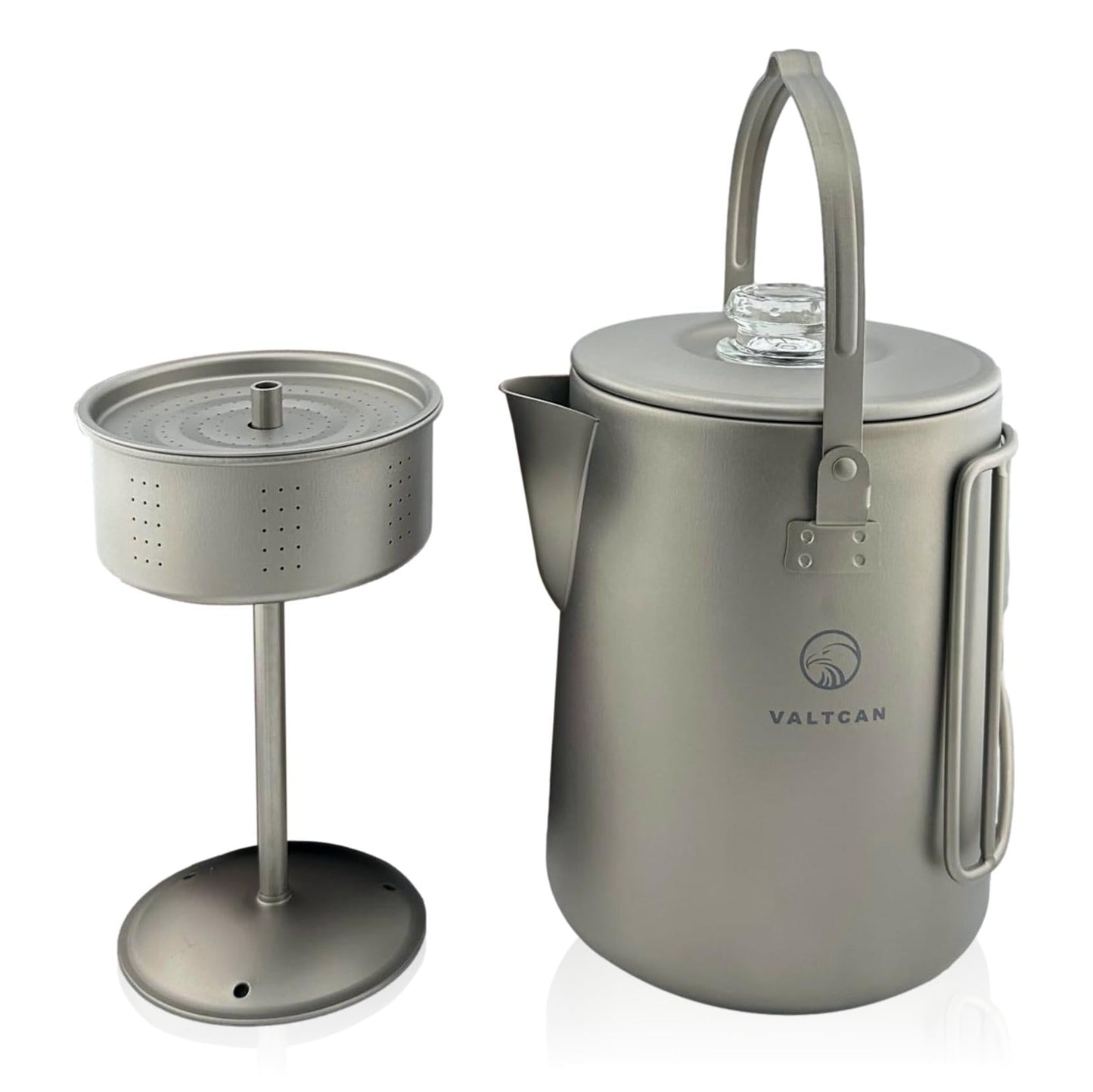
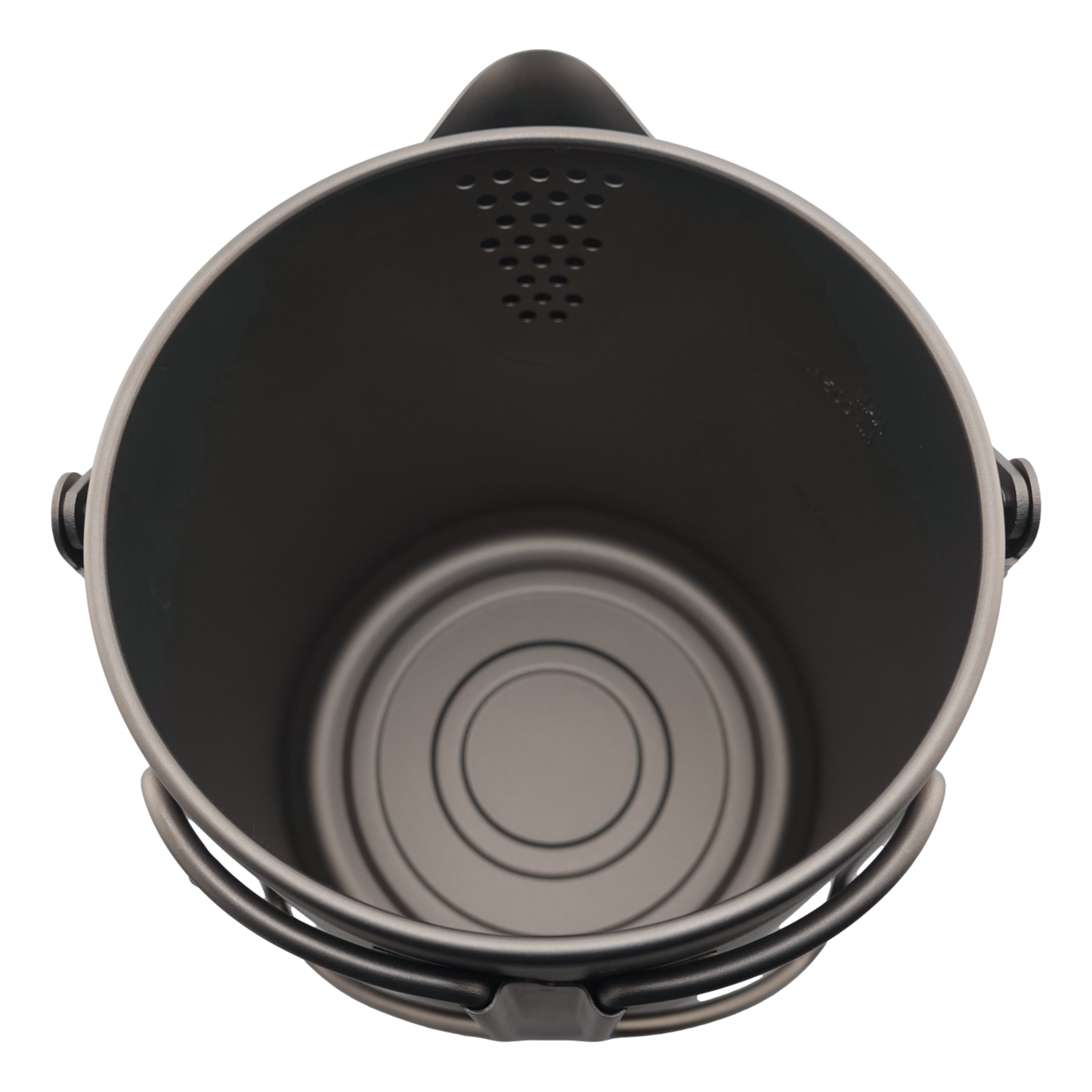
You have seen the cycle: the enamel pot that chipped into the fire, the aluminum perc that made every cup taste like nickels, the plastic knob that melted on the second trip. This pot ends it. Every part that touches your coffee is Grade 1 titanium: the pot, the filter stem and basket, the lid, the handles. The filter basket is CNC machined from solid stock. There is no coating to chip, nothing to rust, and nothing to wear out. Set it over the flame, watch the knob, pour six cups.

The Material Argument
Coffee Is Acid. Titanium Does Not Care.
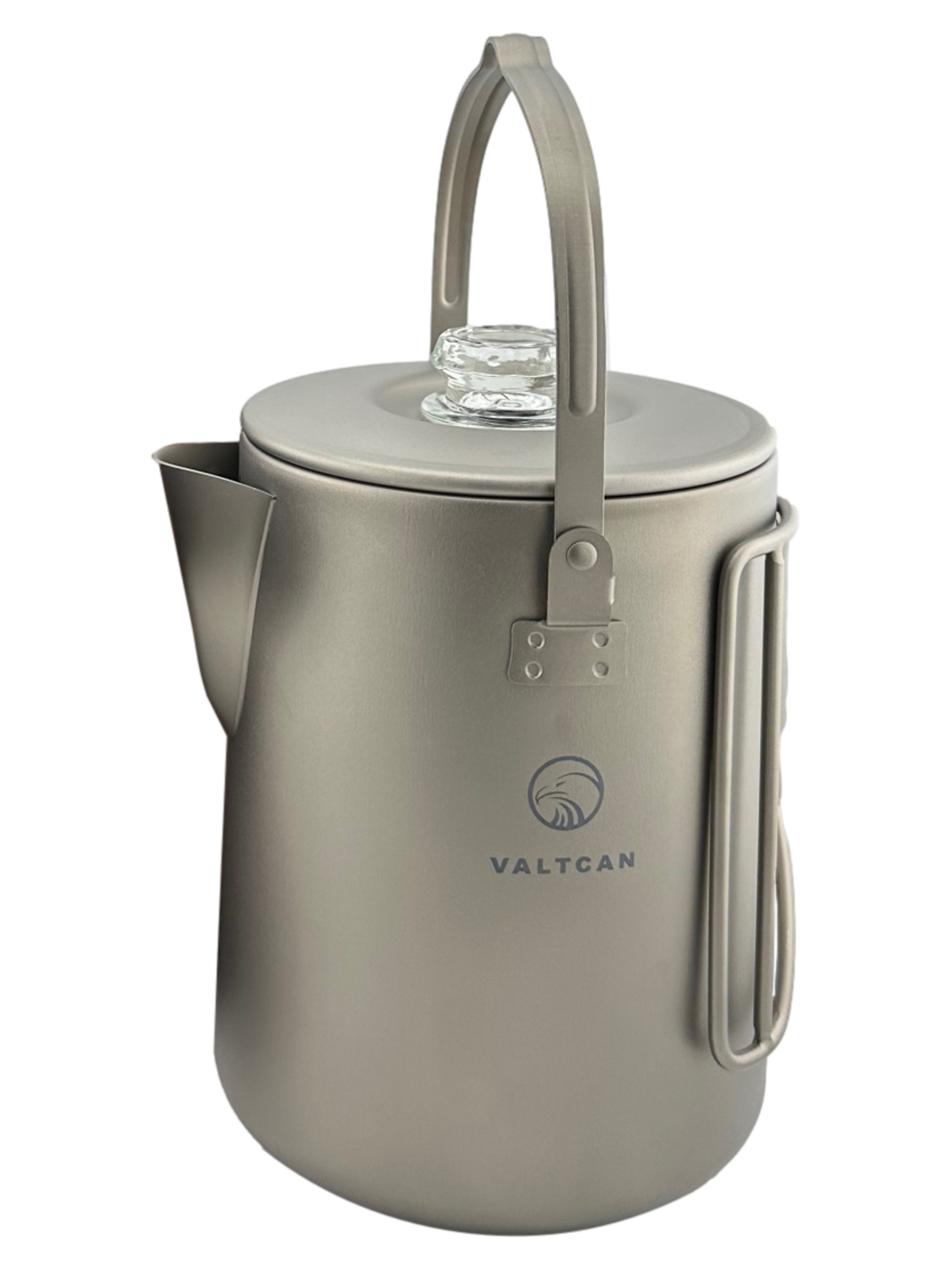
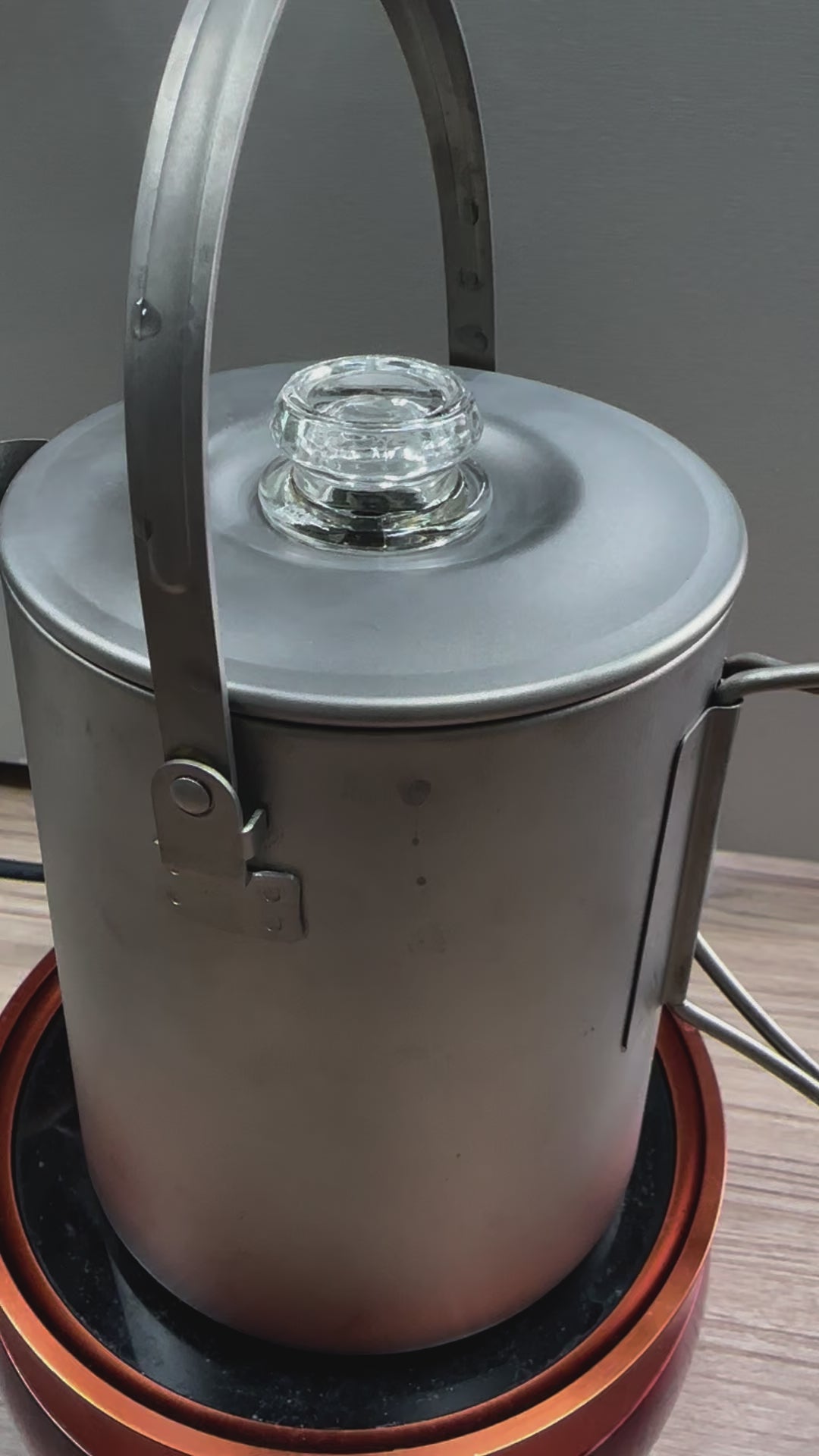
Coffee acids react with aluminum, corrode enamel coatings, and interact with stainless alloys. That is where the classic metallic camp-coffee taste comes from. Grade 1 titanium is biologically inert: it does not react with coffee acids, oils, or heat, so your beans taste exactly as the roaster intended, brew after brew, year after year. The only non-titanium part on the whole pot is the glass brew-viewer knob on top.
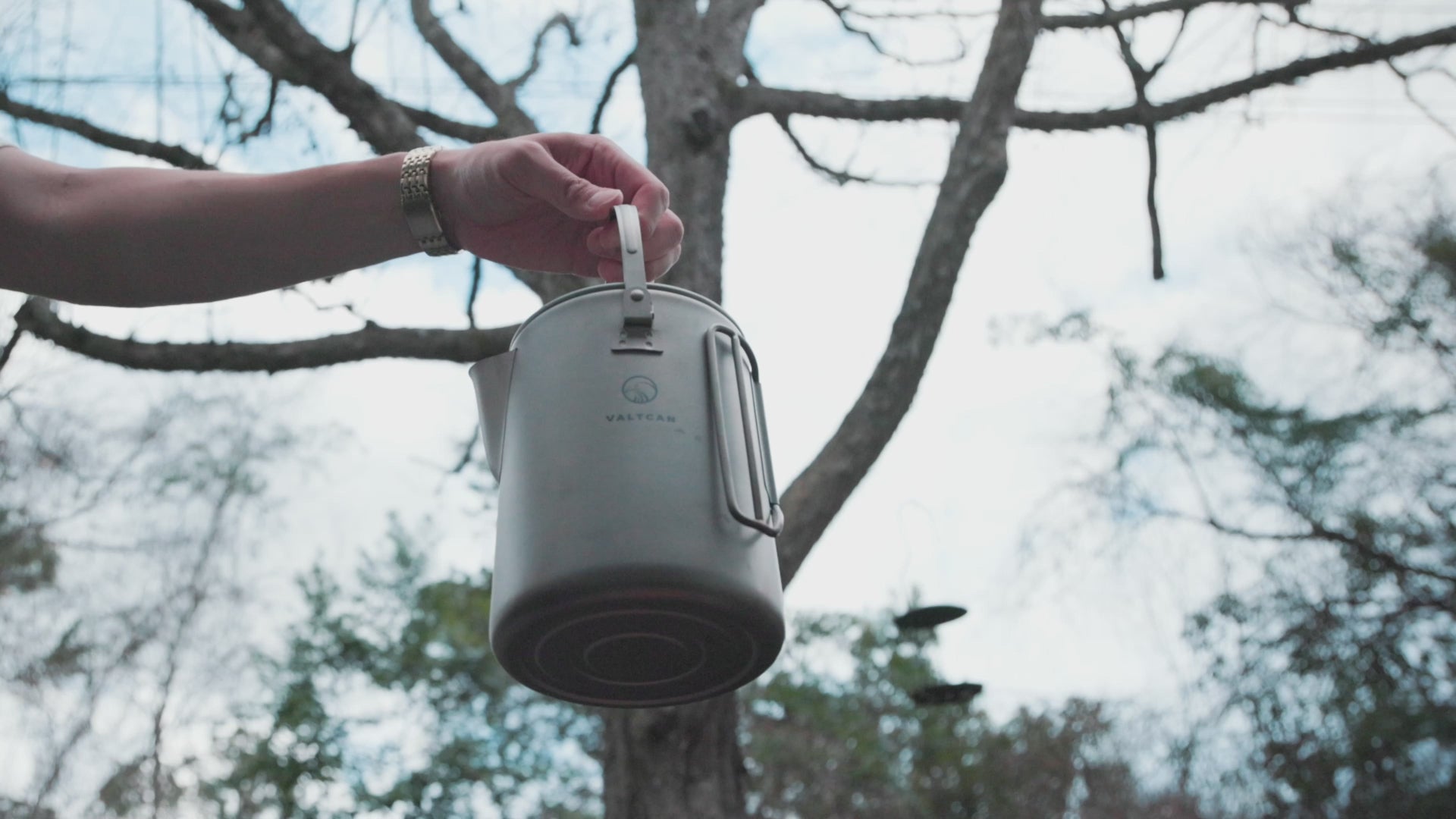
13.9 oz with filter stack, lid, handles, and case. About half the weight of a comparable steel percolator.
1.5 L of coffee in 4 to 5 minutes of gentle percolation. 2.0 L as a kettle with the stack out.
Bare Grade 1 titanium. Nothing to chip, cure, season, or leach.
Note: it does not work on induction cooktops, the glass knob is the one part that will not survive a hard drop outside its case, and a percolator rewards attention: leave it surging on high heat and it brews bitter. Those are the trades for a pot with no coatings, no aluminum, and no parts that wear out.
Shop Mornings and Fire Pits
Built Like the Tools You Keep
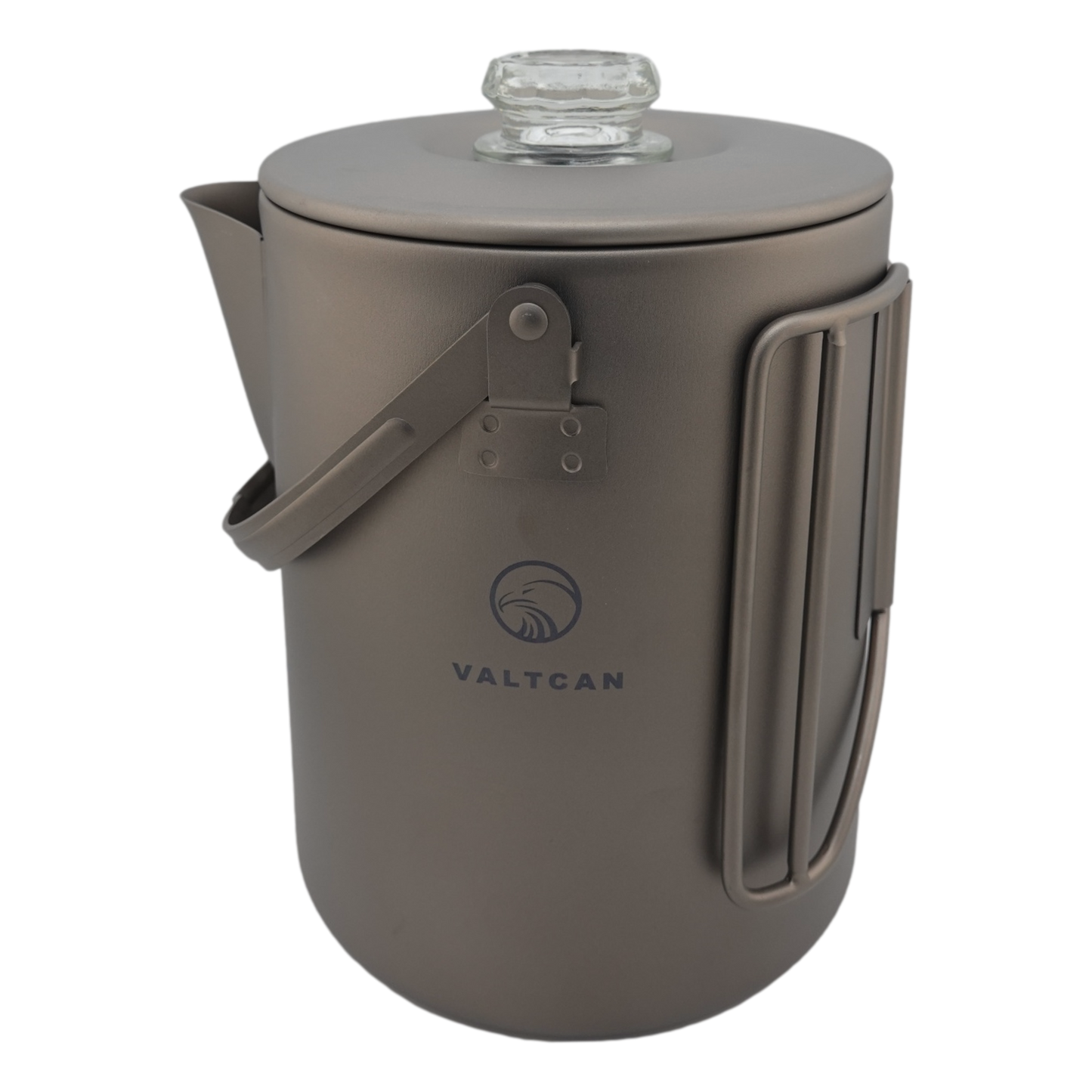
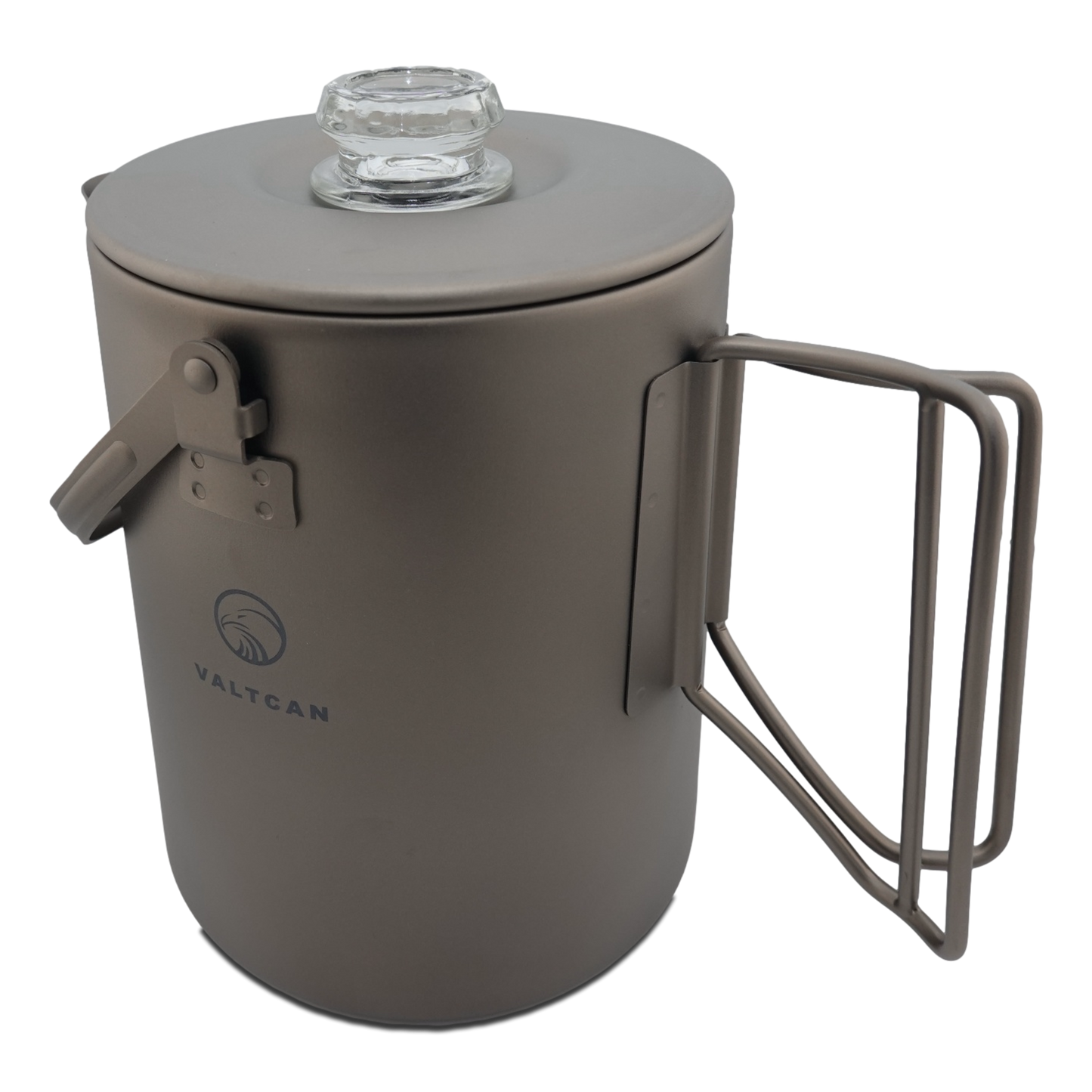
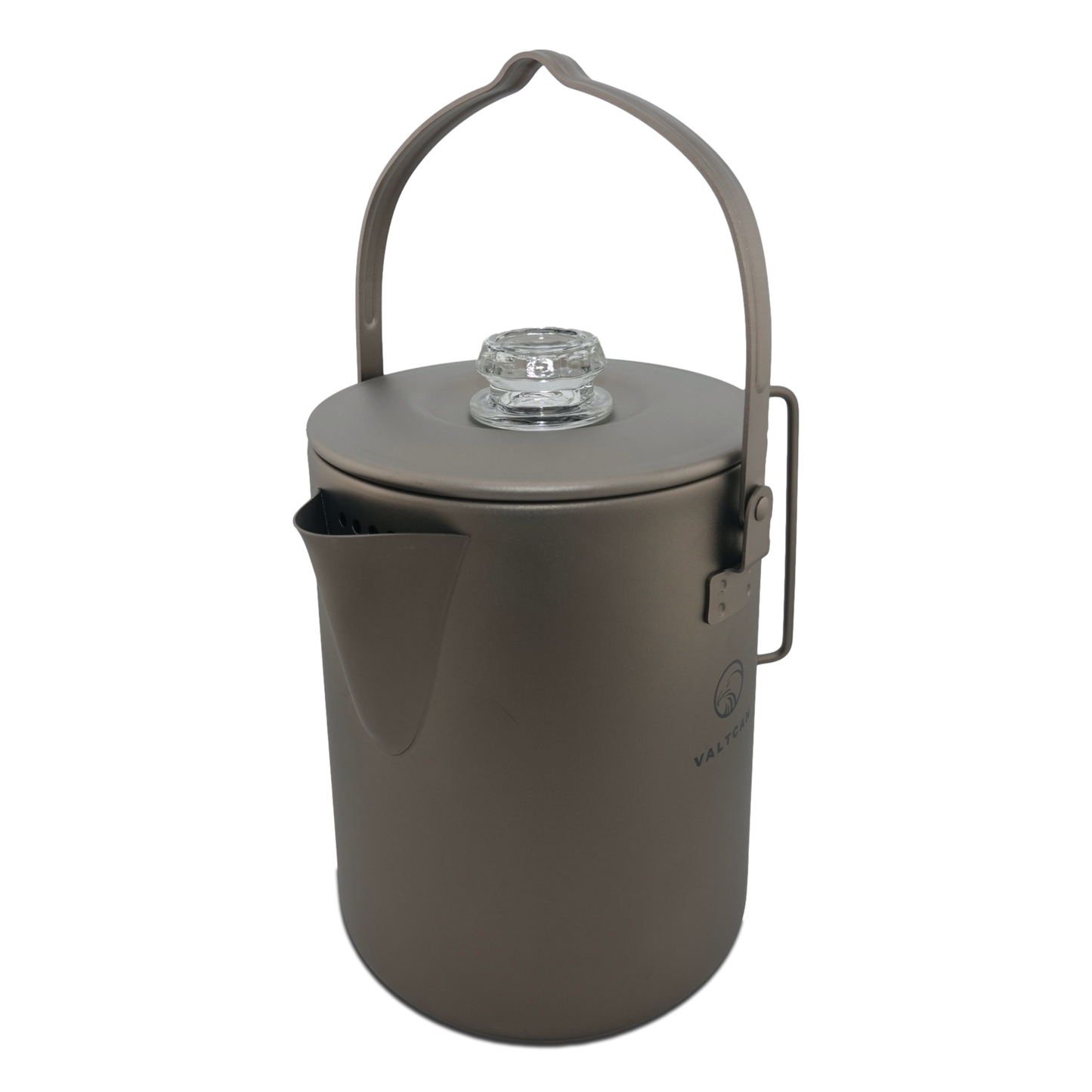
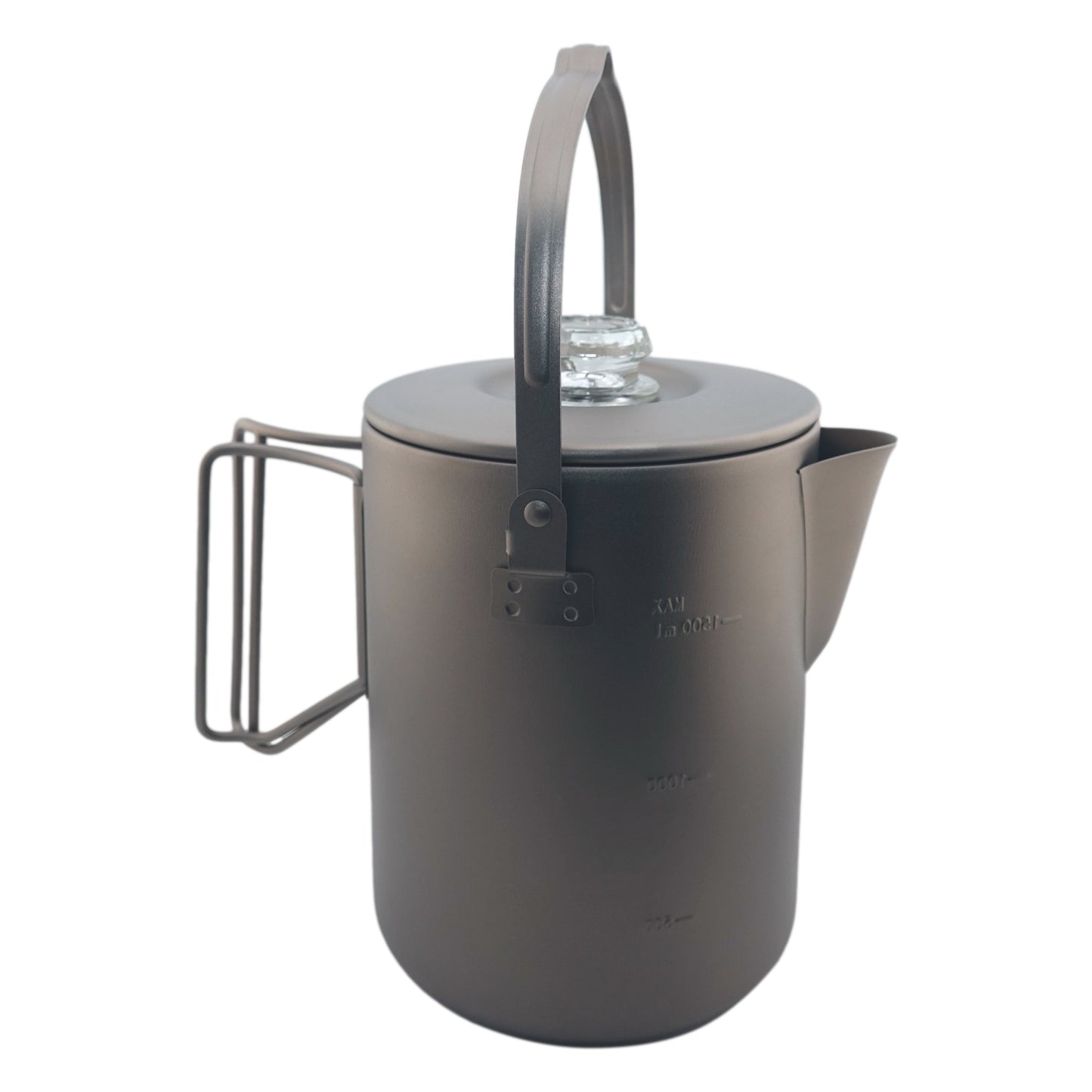
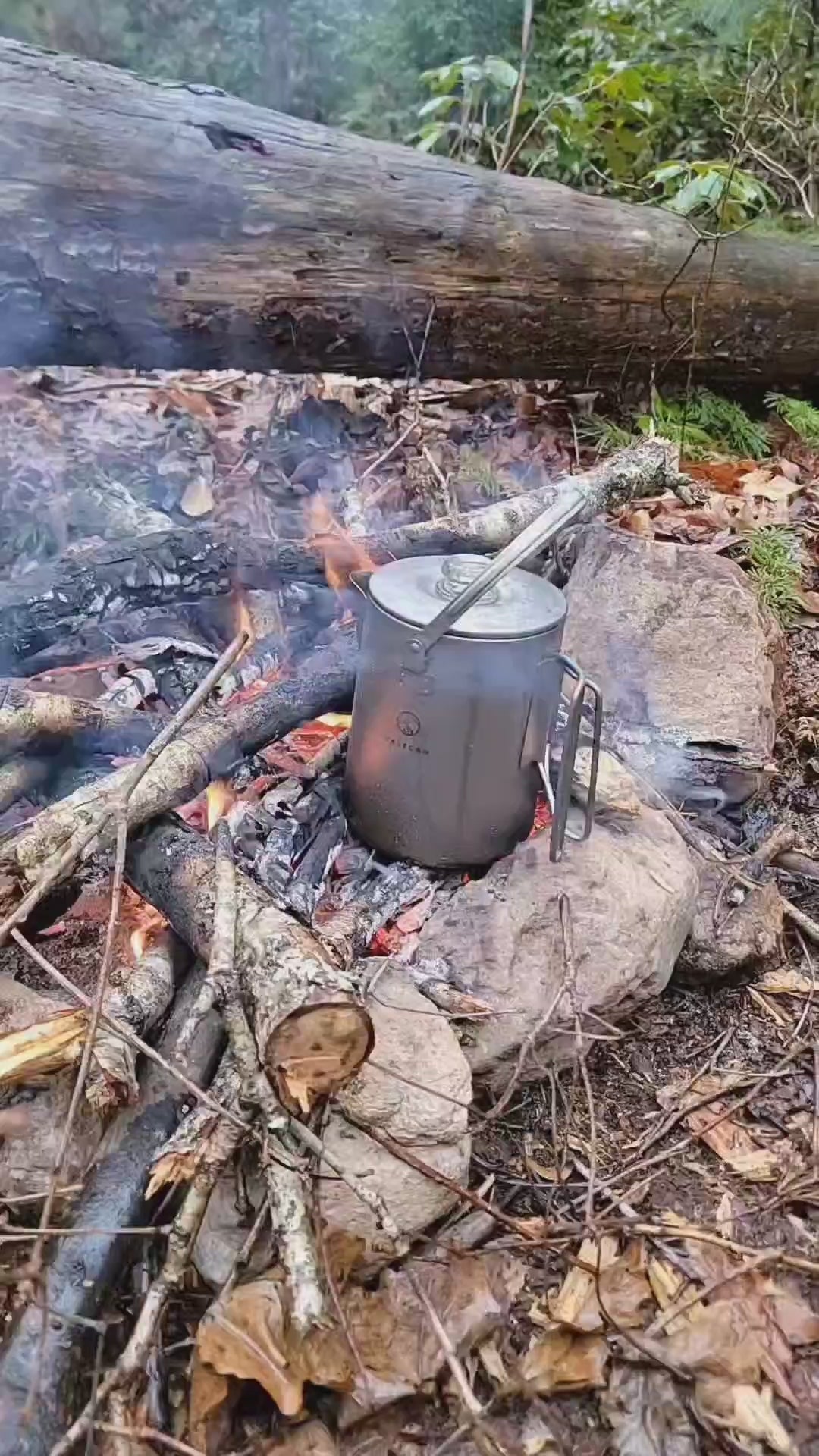
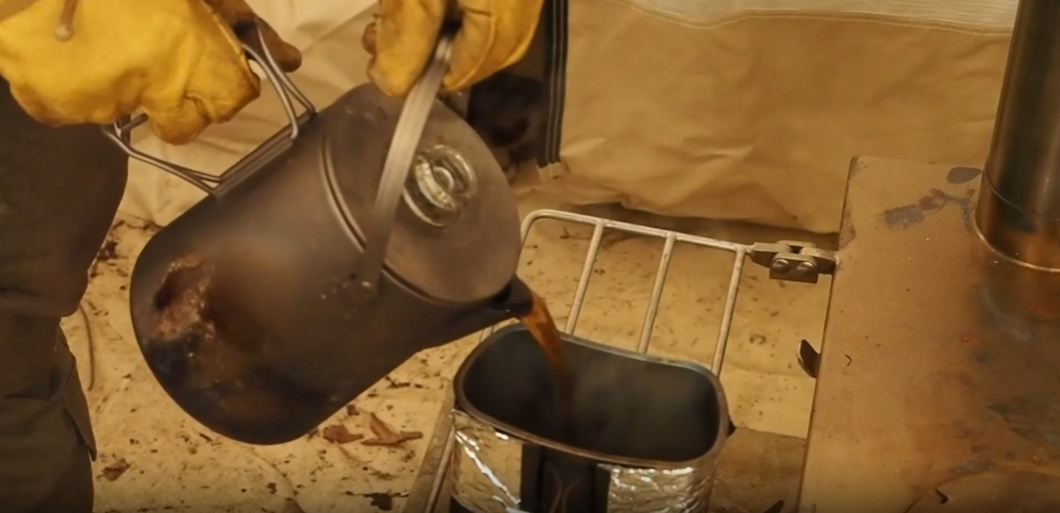
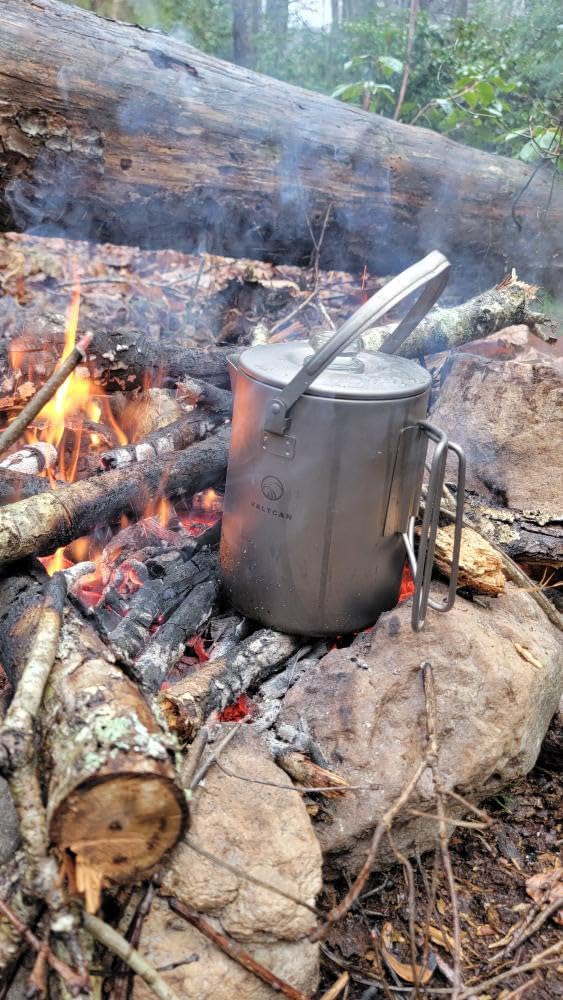
The bail handle hangs from a tripod hook straight over open flame. The side handle folds flat for the pack and swings out for the pour. Riveted brackets, machined basket, etched fill marks: hardware, not housewares. Flame heat will pull golds and blues out of the metal over time. That patina is not damage. It is the mark of a pot that works for a living.
The Morning Ritual
Decide Once. Brew for Decades.
One pot replaces the drip machine at the cabin, the kettle in the kit, and every percolator you would have bought after it. Watch the brew build color in the glass knob, pull it one shade before bold, pour slow from the spout. No cords, no pods, no filters to reorder. A quiet ritual with nothing left to upgrade.

Any Flame
From the Kitchen Stove to a Campfire at 12,000 Feet
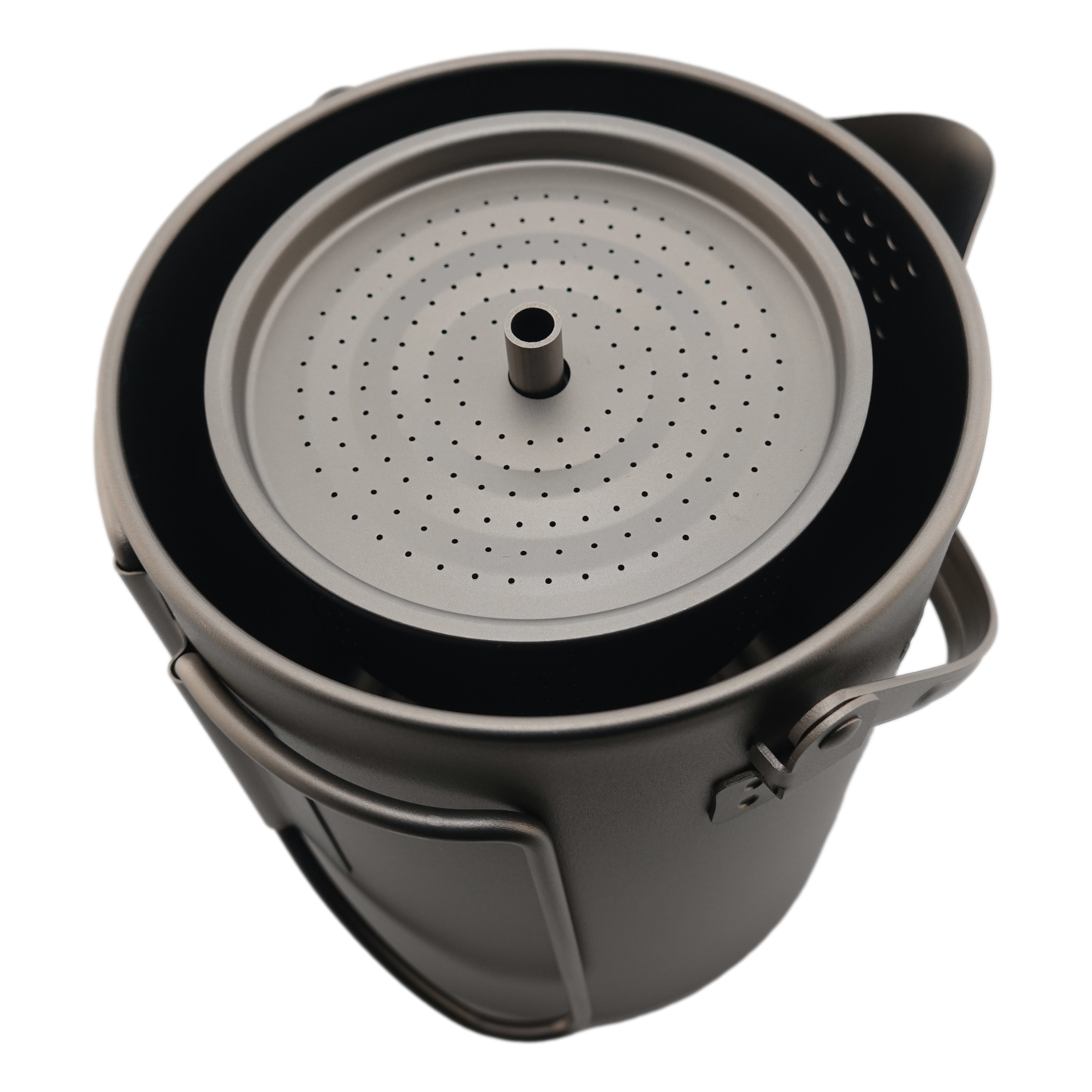
Gas burner, electric cooktop, camp stove, or open fire: this percolator brews on all of them and can sit directly in the flames without damage. Lift the filter stack out and it becomes a 2.0 L titanium kettle for tea, cocoa, or camp water. The whole stack nests inside the pot, and the pot rides in its included carrying case at the top of the pack, ready for the morning.

Failure Analysis
Every Percolator Fails Somewhere. Find the Failure Mode.
Aluminum taints the cup, enamel chips into the fire, plastic melts, paper runs out, steel stays in the truck because it is too heavy for the pack. Each failure mode was removed at the design stage, not patched later.
| Component | What usually fails | This percolator |
|---|---|---|
| Pot body | Aluminum reacts with coffee acids and leaves a metallic taste | Grade 1 titanium, biologically inert |
| Coating | Enamel chips and corrodes over open flame | No coating at all, bare titanium |
| Filter | Paper filters run out on the trail, plastic parts melt | CNC-machined titanium basket, nothing to replace |
| Handles and knob | Plastic knobs and painted handles fail next to fire | Titanium handles on riveted brackets, glass brew knob |
| Weight | Steel percolators are too heavy to earn a spot in the pack | 395 g complete, about half the weight of steel |

Specifications
The Numbers
| Material | Grade 1 commercially pure titanium, uncoated. The glass brew-viewer knob is the only non-titanium part |
| Brew capacity | 1.5 L / 50.7 fl oz, about 6 cups of coffee |
| Kettle capacity (filter stack removed) | 2.0 L |
| Total weight | 395 g / 13.9 oz complete with filter stack, lid, handles, and carrying case |
| Dimensions | 145 mm wide from spout to body, 185 mm tall with bail folded (5.7 in x 7.7 in) |
| Filter system | CNC-machined titanium basket on a titanium stem with perforated titanium basket lid. No paper filters |
| Heat sources | Gas stove, electric cooktop, camp stove, campfire, open flame. Does not work on induction |
| Care | Dishwasher safe. No seasoning, no coating to maintain. Skip steel wool and steel utensils on this one; mild soap does the job |
| Included | Percolator pot, filter stem, filter basket, perforated basket lid, main lid with glass knob, carrying case |
| Markings | Etched fill marks from 2 cups to 1.5 L, Valtcan eagle emblem on the pot |
Download: Titanium Percolator Brewing and Care Booklet (PDF)
How It Works
Six Cups in Three Steps
Fill
Water to the etched mark: one cup of water per cup of coffee, from 2 cups up to the full 1.5 L.
Load
Stem in, basket on, one rounded scoop of coarse grounds per cup, then cap the basket with its perforated lid.
Perc and Pour
Rolling boil, then back off to a gentle perc for 4 to 5 minutes. Watch the color build in the glass knob, lift the stack out, and pour.
Before you order: this percolator does not work on induction cooktops, because titanium is not ferromagnetic. Grind coarse: the titanium basket filters without paper, so coarse grounds stay put and espresso-fine grounds fall through. The glass brew-viewer knob is the one fragile part, so pack it in the included case. Everything on the pot gets hot in use: pour by the handle, with a glove or towel at camp.
FAQ
Questions, Answered Straight
Does titanium really fix the metallic taste?
How many cups does it make?
What heat sources can I use?
What grind should I use?
Do I need paper filters?
Is it really all titanium?
How tough is the glass knob?
Can I use it as a plain kettle?